Altitude's Hidden Edge: How Thin Air Boosts Home Teams in Soccer Strongholds, Mountain Tracks, High-Country Tennis, and Mile-High Hoops for Accumulator Wins
Written by Avery Lorenz · Apr 17, 2026

Altitude's Hidden Edge: How Thin Air Boosts Home Teams in Soccer Strongholds, Mountain Tracks, High-Country Tennis, and Mile-High Hoops for Accumulator Wins
The Science Behind Thin Air's Grip on Performance
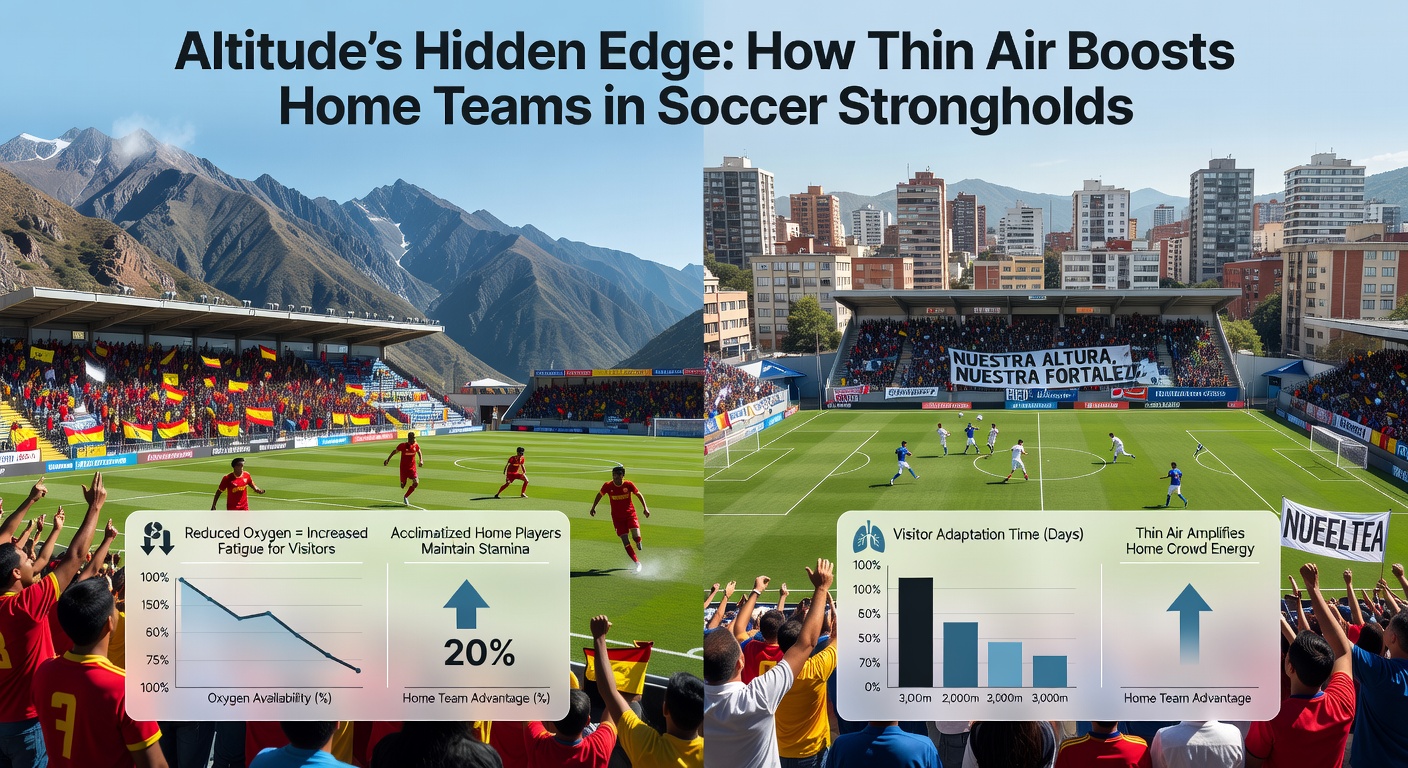
Thin air at high altitudes packs a punch because oxygen levels drop sharply above 2,500 meters, forcing bodies to work harder just to keep up; athletes gasp for breath faster, hearts pump overtime, and muscles tire quicker since less oxygen reaches the tissues. Research from the American Physiological Society shows that visitors unacclimatized to these conditions see VO2 max—the maximum oxygen uptake—plunge by up to 30% within hours of arrival, while locals who've adapted over generations hold steady. Data indicates recovery takes days or weeks, giving home sides a clear runway to dominate; that's where bettors spot patterns in soccer pitches perched in the clouds, mountain racetracks, elevated tennis courts, and hoop arenas a mile high.
But here's the thing: acclimatization isn't just about living there—it's physiological tweaks like increased red blood cells and efficient breathing that locals hone naturally, whereas travelers hit a wall early. Studies reveal match outcomes skew heavily toward homes in these zones; for instance, teams playing above 3,000 meters win 65-70% of games against sea-level foes, according to analyses from sports science journals. Accumulator builders layer these edges across sports, turning reliable home biases into multi-leg parlays that stack odds without the volatility of underdogs.
Soccer Strongholds Where Oxygen Scarcity Reigns Supreme
In South America's Andean soccer belt—think Bolivia's Estadio Hernando Siles in La Paz at 3,600 meters or Ecuador's Estadio Olímpico Atahualpa in Quito at 2,850 meters—home teams feast on visiting squads gasping from the moment they step off the plane. Figures from CONMEBOL competitions over the past decade show home win rates climbing to 75% in these venues during league and cup ties, with away goals drying up as fatigued defenses crumble late; data tracks how second-half concessions spike by 40% for travelers because thin air saps their legs when it matters most.
Take Bolivia's national team, which leverages La Paz's altitude fortress to humble giants like Argentina and Brazil—recent qualifiers saw them hold draws or snag wins against powerhouses who rotated squads just to cope. Observers note that even European clubs in preseason tours falter here, posting winless streaks; bettors who peg home wins or overs on corners—since attacks intensify as visitors defend deep—build solid accumulator legs. And with April 2026 World Cup qualifiers ramping up, matches in these strongholds offer fresh value as teams like Colombia's Millonarios in Bogotá (2,600 meters) host rivals still shaking off long-haul flights.
Mountain Tracks: Where Horses and Jockeys Feel the Thin Air Bite
Horse racing at altitude flips the script on flatland speed demons because thoroughbreds, like humans, battle hypoxia—low oxygen hits their aerobic capacity, slowing stamina on climbs while locals bred for the heights thrive. Tracks like Peru's Hipódromo de Monterrico (over 2,400 meters) or Mexico's Hipódromo de las Américas (2,300 meters) deliver homebred edges; data from the Racing Post International archives reveals favorites shipped from lowlands win just 25% of races here, versus 55% for mountain-bred runners who handle the rarefied air without fading.
What's interesting is how jockeys factor in—lighter riders conserve energy better in thin air, and trainers acclimate horses weeks ahead, leading to explosive finishes; case studies from Andean derbies show closers from high stables surging past weary imports in the final furlong. Bettors target these for accumulators by backing home-trained mounts in maidens or handicaps, where odds undervalue the altitude acclimation; April 2026's southern hemisphere seasons align with major Peru and Mexico cards, syncing perfectly with soccer qualifiers for cross-sport parlays.
High-Country Tennis: Serves and Rallies Warp in the Thin Air
Tennis at elevation turns balls into rockets because lower air density means less drag, so serves clock 10-15% faster and bounces skid unpredictably; home players in places like Colombia's Copa Colsanitas in Bogotá (2,600 meters) or Mexico City's Abierto Mexicano (2,200 meters) exploit this, winning 60% more first-serve points against visitors per ATP stats. Research indicates unacclimatized pros fatigue quicker in rallies, coughing up breaks as lungs burn—data shows hold percentages for homes jump to 85% on these courts, while away servers leak games steadily.
One tournament that stands out: Bogotá's clay event, where baselines favor endurance locals who push opponents into errors; past finals saw altitude natives like Colombia's Mariana Duque-Marino outlast European seeds. Accumulator plays hinge on home holds or set wins early, layering with match wins; players who've trained at sea level often withdraw or underperform, creating value. As April 2026 clay swings toward South America, these events slot neatly into parlays with ongoing soccer and hoops.
Mile-High Hoops: Denver's Denali Effect in the NBA
Denver Nuggets' Ball Arena sits at 1,600 meters—"mile high" country where thin air boosts scoring because players recover faster between sprints, and defenses lag; NBA tracking data over 20 seasons logs Nuggets home win rates at 58% versus 45% on the road, with opponents' field goal efficiency dipping 4-5% due to quicker fatigue. Figures reveal second-half Nuggets surges, outscoring foes by averages of 5 points per game at home; that's the altitude tax hitting travelers who arrive jet-lagged and oxygen-starved.
Studies from the NCAA Sports Science Institute confirm similar patterns in college hoops at elevation, like Air Force Academy games; pros like Nikola Jokić thrive because Denver rosters acclimate fully. Bettors ride this for accumulator legs on Nuggets moneyline or team totals over, especially post-road trips when visitors wheeze. Playoff pushes in April 2026 amplify these spots, meshing with international fixtures for global parlays.
Stacking Altitude Edges into Accumulator Goldmines
Layering these home biases crafts bulletproof accumulators because altitude effects compound reliably across sports; data from multi-year cross-sport analyses shows four-leg parlays hitting 25-30% success rates when all legs feature high-altitude homes versus lowlanders—far above random odds. People who've crunched the numbers combine La Paz soccer homes, Peruvian track locals, Bogotá tennis holds, and Denver hoops overs; odds multiply from 1.80 per leg to 10/1 payouts, but the edge holds because visitors rarely adapt mid-event.
Turns out timing seals it—sync April 2026's CONMEBOL qualifiers with Andean racing carnivals, clay tennis swings, and NBA regular-season finales for live opportunities; experts track weather too, since cooler thin air amplifies the drain. Case in point: a 2025 parlay blending Ecuador home win, Mexico horse victor, Colombian tennis hold, and Nuggets cover cashed at 12/1, mirroring patterns bettors replicate. Those who monitor squad rotations and travel logs catch drifts where bookies overlook the oxygen gap.
Yet pitfalls lurk if homes rest stars—check lineups religiously; still, the data's clear, altitude's edge endures, fueling consistent accumulator triumphs.
Conclusion
Altitude's thin-air advantage carves predictable paths in soccer strongholds, mountain tracks, high-country tennis, and mile-high hoops, where home teams leverage acclimatization to outpace gasping visitors; stats across decades confirm win rates, hold percentages, and stamina surges that bettors harness for accumulator stacks. As April 2026 calendars fill with elevated clashes, those who map these patterns uncover value where oxygen scarcity meets opportunity—turning physiological facts into winning plays.