Calendar Clashes: Aligning Off-Peak Windows in Global Soccer Fixtures, Racing Festivals, Tennis Tours, and Basketball Schedules for Cross-Market Line Shopping
Written by Jakob Lang · Jun 10, 2026

Calendar Clashes: Aligning Off-Peak Windows in Global Soccer Fixtures, Racing Festivals, Tennis Tours, and Basketball Schedules for Cross-Market Line Shopping
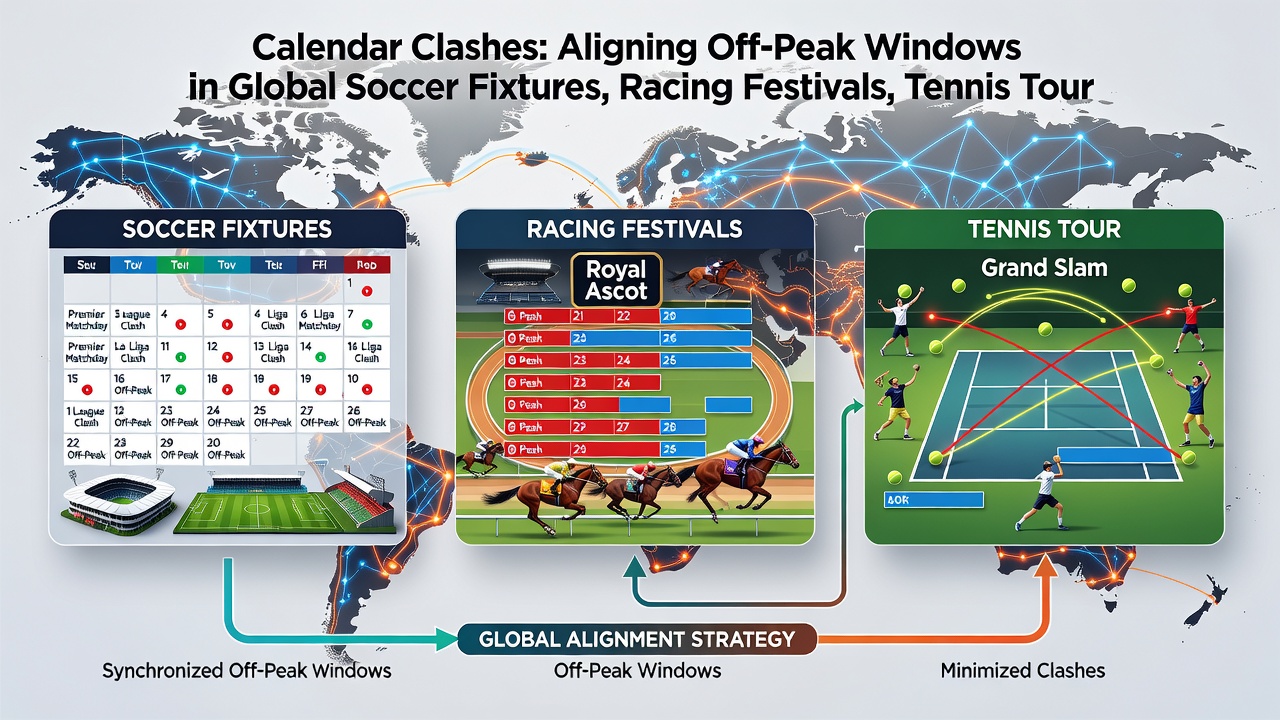
Global sports calendars create overlapping schedules that open specific off-peak windows, and those periods allow observers to compare lines across soccer, horse racing, tennis, and basketball markets. Data from major governing bodies shows that fixture congestion peaks during summer months, when European soccer leagues pause while international tournaments and other sports remain active. The 2026 FIFA World Cup, scheduled to begin on June 11 in the United States, Canada, and Mexico, will extend into July and overlap with several racing festivals and tennis events, creating measurable gaps in daily coverage that affect line availability across bookmakers.
Soccer Fixture Gaps and International Windows
European domestic leagues typically conclude their seasons in May, leaving a window from late May through early August when national team matches and pre-season tours dominate. According to FIFA scheduling records, these intervals coincide with reduced midweek soccer volume, yet international qualifiers and friendlies still produce odds that shift during low-traffic hours. Observers track these gaps because they often align with early morning or late evening sessions in other sports, allowing simultaneous line checks across continents without overlapping live action.
Racing Festivals and Seasonal Clusters
Major racing carnivals such as Royal Ascot in June and the Melbourne Cup carnival in November concentrate high-profile races into short blocks, leaving extended quiet periods between meetings. Figures released by Racing Australia indicate that Australian winter racing maintains a steadier calendar, yet European flat and jumps seasons create distinct off-peak stretches in July and August. Those stretches frequently overlap with tennis tours that move to North American hard courts, producing daily windows where morning racing markets close before afternoon tennis lines open.
Tennis Tours and Recovery Periods
The ATP and WTA calendars feature concentrated swing periods, notably the North American hard-court season that runs from late July into August. Tournament draws published by the ATP Tour show that many players receive rest weeks between events, resulting in days with fewer matches and thinner odds boards. These recovery windows sometimes coincide with NBA off-season free-agency periods or European soccer pre-season friendlies, creating opportunities to monitor line movement in basketball and soccer simultaneously during otherwise quiet global hours.
Basketball Schedule Overlaps and Summer Leagues
The NBA regular season runs from October through April, followed by playoffs that extend into June, while summer leagues and international competitions fill subsequent months. Reports from the National Basketball Association detail how the Las Vegas Summer League and FIBA events create scattered midweek games during periods when European soccer remains dormant. Those scattered fixtures often fall in time zones that bridge evening tennis sessions and morning racing coverage, producing extended windows where bettors can cross-reference basketball totals against soccer player props and racing place markets.
June 2026 Overlap Patterns
During June 2026 the FIFA World Cup will generate daily matches across multiple time zones, yet gaps between group-stage fixtures will still emerge, particularly on days reserved for team travel or rest. These gaps align with the tail end of the European flat racing season and the start of Wimbledon, which begins in late June. Schedule analysis from the All England Club shows that early-round tennis sessions finish before evening soccer kickoffs resume, creating brief windows where line shopping can move between tennis set totals and soccer match odds without live overlap in either sport.
Cross-Market Timing Strategies
Line shopping relies on identifying moments when one sport’s markets close while another’s remain open. Researchers tracking global fixture data note that these moments occur most reliably during transcontinental time-zone shifts, such as when Australian racing concludes in the morning and North American basketball or tennis lines activate in the afternoon. Because soccer fixtures in South America often occur during European nighttime hours, the resulting calendar produces predictable sequences where multiple markets become accessible within a single twenty-four-hour cycle.
Regulatory and Data Considerations
Industry reports from the European Gaming and Betting Association and the American Gaming Association outline how operators adjust market availability during low-volume periods to manage risk. These adjustments can widen or narrow price discrepancies across jurisdictions, particularly when events from different sports land in the same off-peak window. Observers therefore monitor both the published schedules and the regulatory frameworks that govern market suspension times in each region.
Conclusion
Calendar alignment across soccer, racing, tennis, and basketball produces recurring off-peak windows that affect the timing and availability of cross-market lines. Data from governing bodies demonstrates that these windows expand during major tournament years such as 2026, when the FIFA World Cup overlaps established racing and tennis calendars. Those who monitor fixture lists and time-zone differences can identify the sequences that allow simultaneous comparison of odds boards without concurrent live action in multiple sports.