Journey Jitters: Mapping Travel Fatigue Impacts on Distant Football Fixtures, Transcontinental Tennis Tours, Road-Weary Basketball Schedules, and Far-Flung Racing Meets
Written by Avery Lorenz · Jun 22, 2026
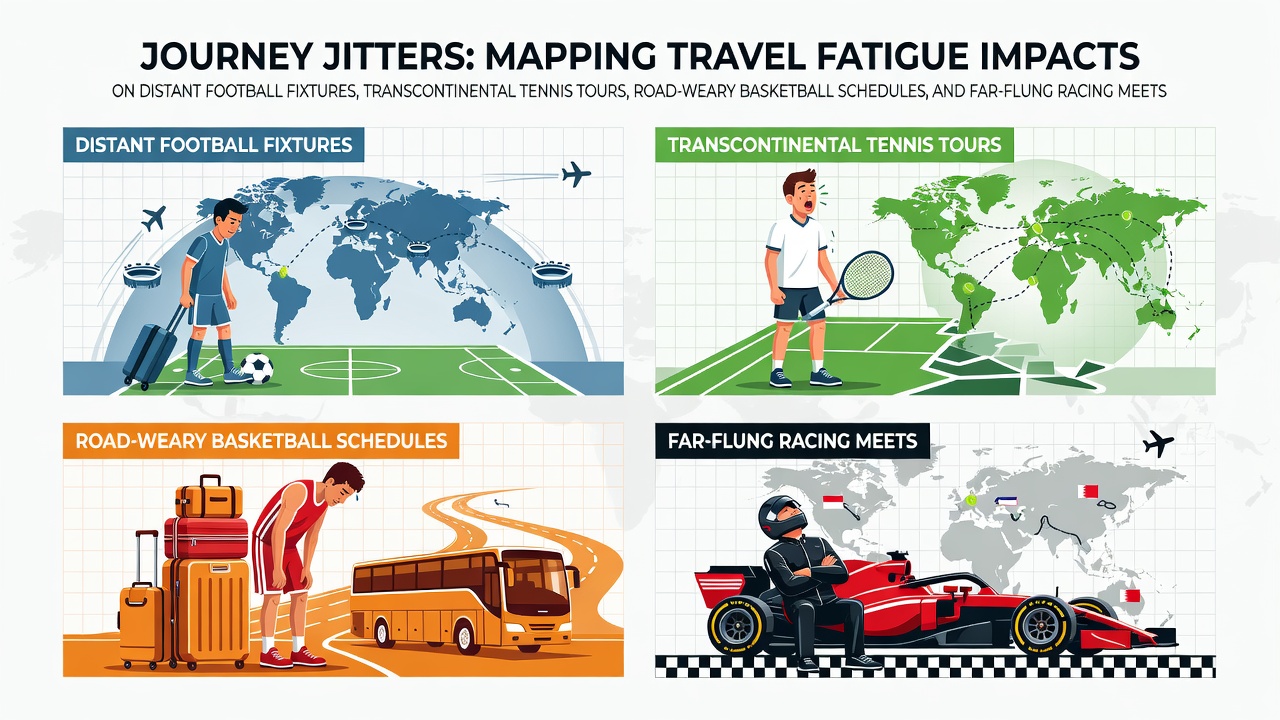
Journey Jitters: Mapping Travel Fatigue Impacts on Distant Football Fixtures, Transcontinental Tennis Tours, Road-Weary Basketball Schedules, and Far-Flung Racing Meets
Travel across time zones disrupts circadian rhythms in athletes who compete in football, tennis, basketball, and horse racing, and researchers have documented consistent patterns of reduced performance metrics when schedules force rapid relocation over thousands of miles. Studies from sports medicine programs show that eastward flights produce more pronounced effects than westward ones because the body struggles to advance its internal clock, while recovery windows shrink during compressed tournament calendars.Football Fixtures Across Continents
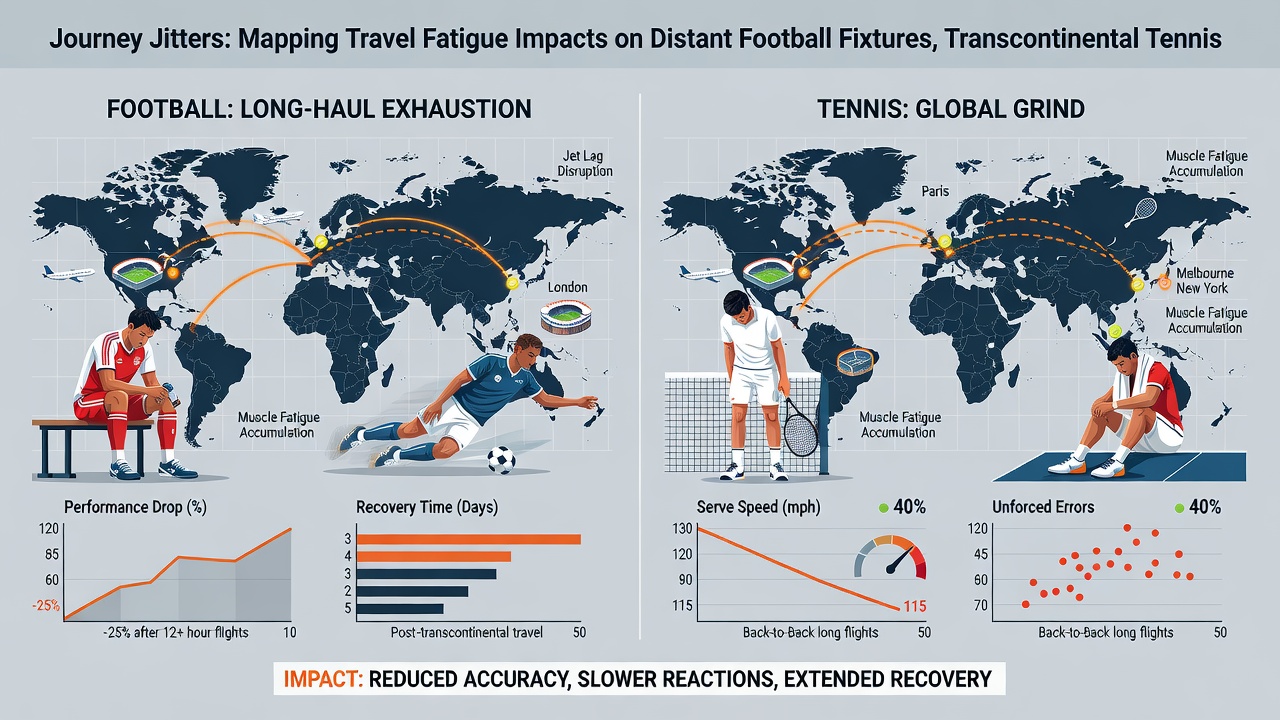
European clubs that qualify for intercontinental tournaments often face flights exceeding 12 hours before group-stage matches in South America or Asia, and data from FIFA technical reports indicate elevated injury rates in the first 48 hours after arrival when acclimatization periods fall below five days. Teams crossing multiple zones report measurable drops in high-intensity running distance during the opening 30 minutes of play, according to GPS tracking studies conducted by university laboratories in Australia and Germany. Midfielders and fullbacks show the clearest declines because their roles demand sustained aerobic output that suffers when sleep architecture fragments during overnight journeys.
Transcontinental Tennis Tours
Tennis players on the ATP and WTA circuits log more than 100,000 air miles annually during the season, and longitudinal analyses from the University of California, Los Angeles reveal that serve accuracy declines by an average of 4 to 7 percent in the first match after a trans-Pacific crossing. The Grand Slam calendar places particular strain on participants who must travel from Australian hard courts in January directly to South American clay events in February, leaving minimal time for physiological adjustment. Observers note that recovery protocols involving light training and controlled light exposure help mitigate some effects, yet the cumulative load across a 10-month season still correlates with higher withdrawal rates in later rounds of consecutive tournaments.
Road-Weary Basketball Schedules
NBA teams average more than 40,000 miles of travel per season because the league structure requires back-to-back games in different cities, and league-wide tracking data compiled by the NBA Players Association shows that teams playing on the second night of a back-to-back after crossing two or more time zones win approximately 8 percent fewer games than rested opponents. Centers and power forwards exhibit the sharpest reductions in rebounding efficiency and shot-blocking frequency during the fourth quarter when circadian misalignment compounds physical depletion. The 2025-26 season includes several West Coast teams scheduled for three-game Eastern Conference swings in early June 2026, a period when daylight savings transitions further complicate sleep timing for visiting squads.
Far-Flung Racing Meets
Thoroughbred trainers who ship horses between North American tracks and international venues such as Royal Ascot or the Dubai World Cup report measurable declines in finishing times when transport exceeds 24 hours without adequate rest, according to veterinary studies published by the Australian Institute of Sport and Equine Research Centre. Horses that cross the equator experience thermoregulatory stress in addition to circadian disruption, and heart-rate variability data collected during pre-race examinations indicate elevated stress markers that persist for up to 72 hours post-arrival. Jockeys face parallel challenges because they must maintain precise weight and reaction times while adapting to new time zones, and records from the International Federation of Horseracing Authorities show that riders with fewer than four days between long-haul flights record lower win percentages in feature races.
Cross-Sport Patterns and Mitigation Strategies
Comparative research across the four sports highlights that the duration of the flight matters less than the number of time zones crossed and the timing of competition relative to the athlete’s biological night, and institutions such as the Canadian Sport Institute have published guidelines recommending strategic use of melatonin and timed light exposure to accelerate re-entrainment. Football and basketball teams increasingly charter flights that depart immediately after matches to maximize recovery days at the destination, whereas tennis players and racing participants often rely on individual recovery plans because their calendars lack centralized scheduling control. Data collected during the 2024 Olympic cycle demonstrated that athletes who received structured sleep education reduced self-reported fatigue scores by 15 percent compared with control groups, suggesting that education combined with logistical adjustments can blunt some travel-related performance decrements.
Conclusion
Mapping these impacts reveals that travel fatigue operates as a quantifiable variable across football, tennis, basketball, and horse racing rather than an anecdotal inconvenience, and governing bodies continue to refine scheduling frameworks and recovery protocols to address the physiological realities of global competition calendars. Continued collection of biometric and performance data will allow federations to refine minimum rest requirements and travel policies that protect both athlete welfare and competitive integrity in future seasons.