Mapping circadian rhythm impacts on athlete outputs to boost parlay accuracy across evening fixtures in soccer, NBA, and ATP events
Written by Jakob Lang · Jun 8, 2026
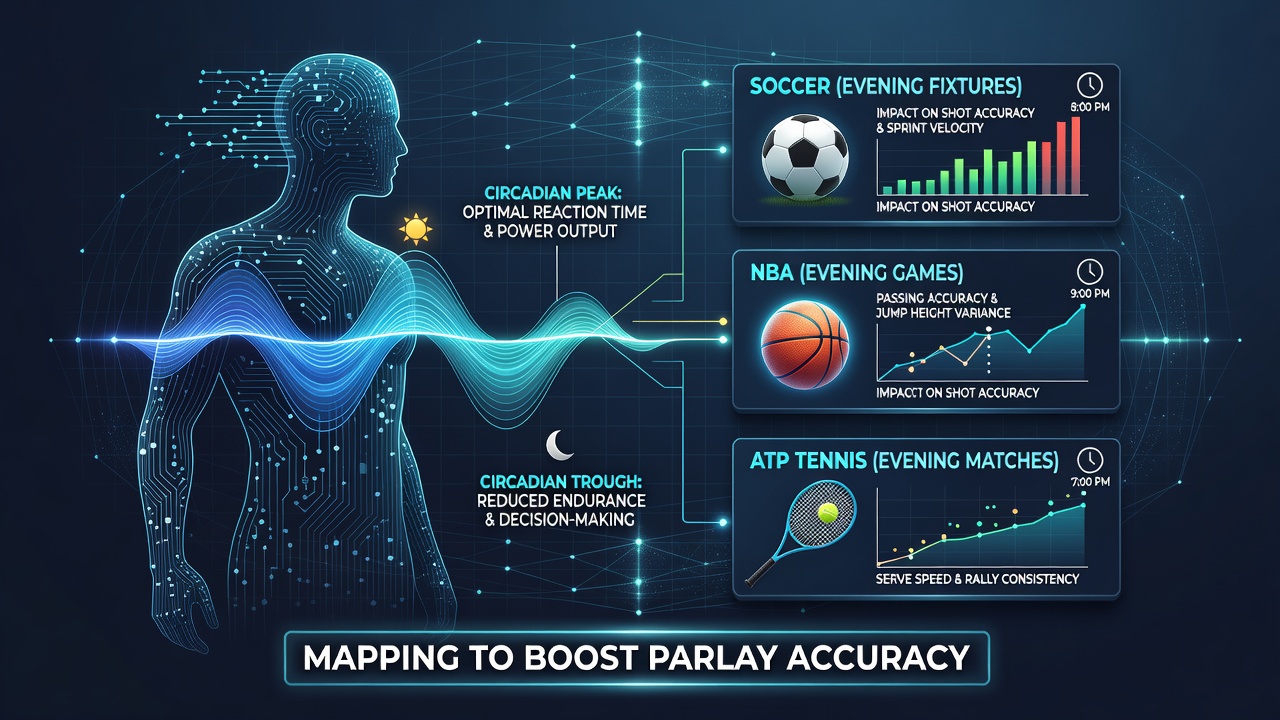
Mapping circadian rhythm impacts on athlete outputs to boost parlay accuracy across evening fixtures in soccer, NBA, and ATP events
Body clocks regulate hormone release, core temperature, and muscle function throughout each day, and these patterns create measurable differences in how athletes respond during evening competitions. Researchers at institutions across multiple continents have tracked these cycles using actigraphy and salivary cortisol sampling to establish baseline performance windows for team and individual sports. Data collected from professional leagues indicates that soccer players often experience a secondary peak in reaction time and sprint speed between 18:00 and 21:00 local time, whereas basketball athletes show more pronounced declines in shooting accuracy after 22:00 when games extend late into the night. Tennis competitors on the ATP circuit display variable serve consistency that correlates with daylight exposure and travel across time zones, especially during events scheduled under artificial lighting.
Performance Patterns in Evening Soccer Fixtures
Evening kickoffs in major European and South American leagues align with natural dips or rises in player alertness depending on the hour and the athlete's habitual training schedule. Studies published in the European Journal of Sport Science reveal that teams playing at 20:00 or later record higher rates of late-match substitutions for fatigue-related reasons compared with afternoon fixtures. Analysts examining possession retention and pass completion percentages across multiple seasons note that these metrics remain stable until roughly the 75th minute, after which measurable drops occur in players whose chronotypes classify them as morning-oriented. Bettors constructing parlays that include total goals or player assists in night games can incorporate these timing windows to adjust expected output ranges for specific squads.
NBA Evening Games and Circadian Adjustments
NBA schedules frequently place tip-offs between 19:00 and 22:30 across different time zones, creating repeated exposure to artificial light and disrupted sleep for traveling teams. Research conducted at the University of Western Australia demonstrates that players logging more than three time-zone crossings within a seven-day period exhibit reduced three-point shooting efficiency during back-to-back evening contests. League-wide tracking of player-tracking data shows that defensive metrics such as steal and block rates hold steadier than offensive efficiency once games move past 21:00, a pattern that surfaces consistently in both regular-season and playoff environments. Parlay models that layer NBA player props with soccer or tennis outcomes benefit from weighting these late-window adjustments, particularly when multiple legs involve teams on the second night of a road trip.
ATP Evening Sessions and Recovery Variables
ATP tournaments schedule many matches under floodlights during the second week of events, and these sessions coincide with periods when core body temperature begins its natural decline. Observers tracking serve speed and unforced-error counts across hard-court and clay events have documented that players who compete after 19:30 local time show wider variance in first-serve percentages compared with those finishing before sunset. Data aggregated from the 2025 season and projected forward into June 2026 indicates that athletes with documented evening chronotypes maintain rally endurance longer, while morning types experience sharper drops in movement speed during deciding sets. These distinctions become relevant for accumulator legs that combine tennis over/under totals with soccer or basketball markets scheduled on the same evening.
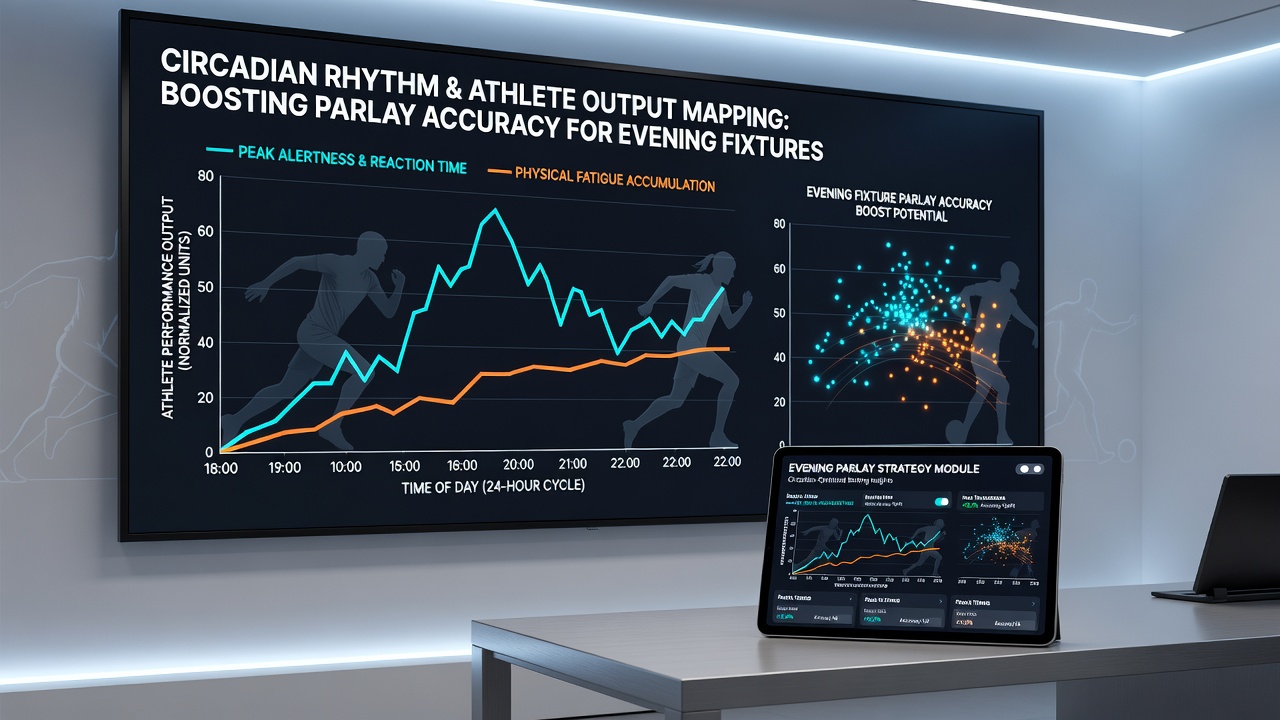
Integrating Circadian Data into Multi-Sport Parlays
Parlay construction that spans soccer, NBA, and ATP events requires alignment of performance windows rather than isolated statistical averages. When fixtures occur within overlapping evening hours, the combined effect of travel fatigue and light exposure can shift expected totals or individual outputs in predictable directions. Figures released by the Australian Institute of Sport and cross-referenced with North American datasets show that incorporating chronotype-adjusted models improves the calibration of projected scoring margins by measurable percentages across sample periods. Bettors who map these variables against fixture start times and team travel logs obtain tighter probability estimates for legs that include goals after the 80th minute, points in the final NBA quarter, or games extending to tiebreaks.
June 2026 Scheduling Context
With the FIFA World Cup set for June 2026 across multiple North American venues, evening kickoff slots will feature prominently in the group and knockout stages. The same month typically hosts ATP grass-court events leading into Wimbledon and NBA playoff conclusion games, creating a dense cluster of late-start fixtures. Scheduling overlaps increase the value of circadian mapping because athletes in all three sports will navigate similar constraints of artificial lighting, compressed recovery, and cross-time-zone movement. League and tournament organizers publish detailed timetables well in advance, allowing systematic incorporation of start-time data into predictive frameworks.
Conclusion
Mapping circadian influences supplies a structured method for refining output estimates in evening soccer, NBA, and ATP contests. The approach draws on established physiological patterns documented across independent research programs and applies those patterns to the specific timing of scheduled matches. When these adjustments enter parlay construction, they provide an additional layer of calibration that reflects documented variations rather than uniform statistical assumptions. Continued collection of time-stamped performance data will further refine the precision of such models as schedules evolve through 2026 and beyond.