Seasonal Data Overlays: Aligning Weather Impacts With Player Availability Patterns Across Football Leagues, Racing Circuits, Tennis Tours, and Basketball Schedules
Written by Rosa Schulz · Jun 26, 2026
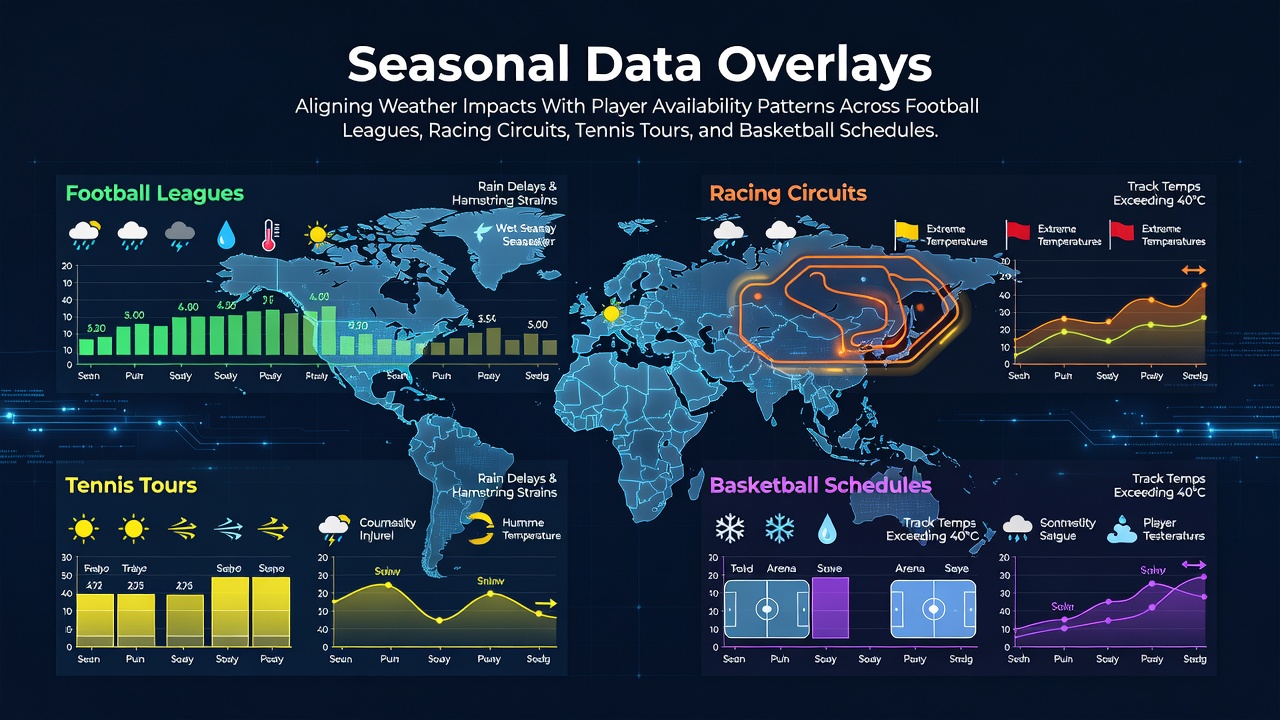
Seasonal Data Overlays: Aligning Weather Impacts With Player Availability Patterns Across Football Leagues, Racing Circuits, Tennis Tours, and Basketball Schedules
Seasonal data overlays combine meteorological records with player and team availability statistics to reveal recurring patterns across multiple sports, and researchers at institutions such as the Australian Bureau of Meteorology have documented how temperature shifts, precipitation levels, and wind conditions correlate with injury rates and scheduling disruptions in football leagues, racing circuits, tennis tours, and basketball schedules.
Football leagues in Europe experience pronounced effects during winter months when heavy rainfall and sub-zero temperatures increase muscle strain incidents, while data collected by the Union of European Football Associations shows elevated absence rates among defenders and midfielders in matches played below 5 degrees Celsius; these patterns emerge consistently from November through February yet shift toward heat-related fatigue in southern divisions during July and August.
Weather Variables in Football adn Racing
Horse racing circuits demonstrate even tighter linkages between surface conditions and participant availability, because trainers adjust horse participation based on going reports issued by racecourse officials, and studies from the British Horse Racing Authority indicate that soft or heavy ground following prolonged rain reduces field sizes by up to 25 percent while elevating veterinary scratch rates; observers note similar dynamics in Australian tracks where summer drought hardens surfaces and prompts jockeys to decline mounts on firmer terrain.
Tennis tours operating on outdoor hard and clay courts encounter rain delays and extreme heat protocols that directly influence player schedules, and records maintained by the International Tennis Federation reveal that tournaments held in humid subtropical zones during June experience higher withdrawal percentages among lower-ranked players who lack access to extended recovery facilities; these interruptions compound when multiple events cluster within a single week, forcing participants to manage travel fatigue alongside weather-related recovery windows.
Patterns Across Tennis and Basketball
Basketball schedules, though primarily indoor, still intersect with seasonal weather through travel disruptions and arena climate control failures, and data compiled by the National Basketball Association shows that teams crossing time zones during winter storm periods record measurable dips in rotation depth because back-to-back games coincide with delayed flights or road closures; analysts overlay these logistical variables against historical availability figures to identify windows where rest advantages concentrate.
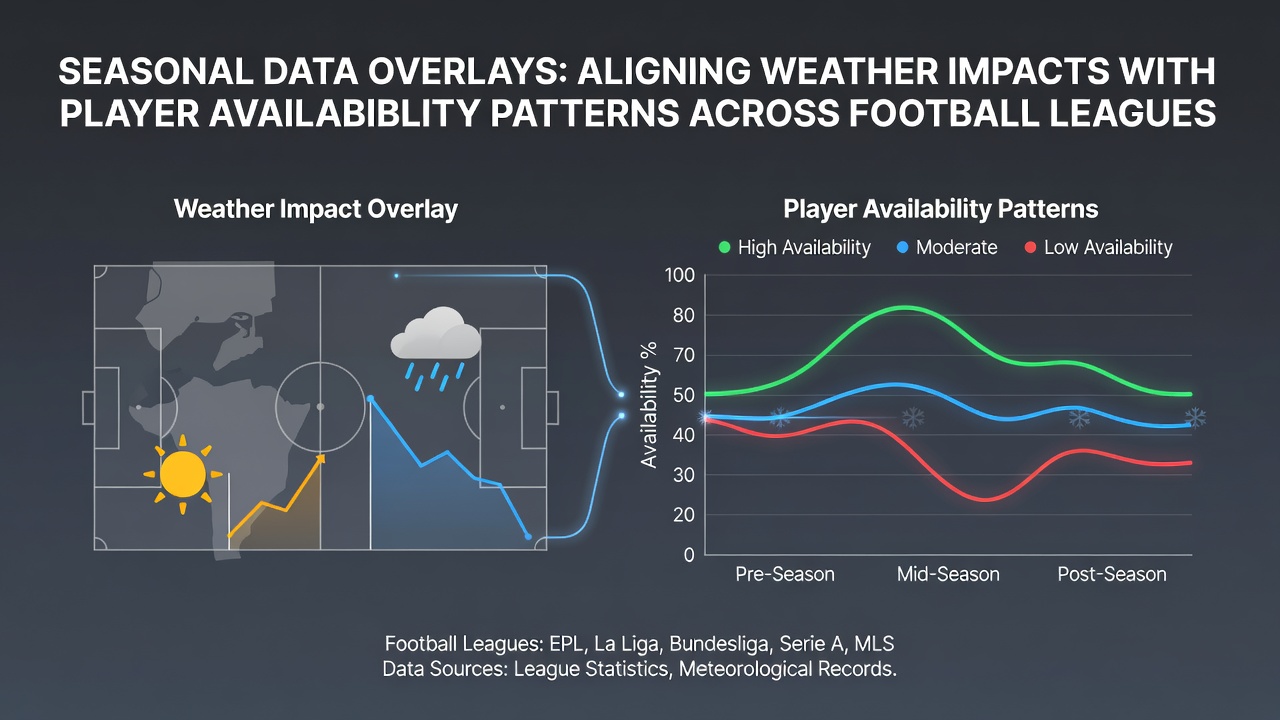
Cross-sport comparisons become feasible once standardized weather indices align with availability datasets, and one study published by researchers at the University of Queensland demonstrates that overlay models improve prediction accuracy for fixture congestion effects by integrating precipitation forecasts with historical injury logs from football, racing, tennis, and basketball simultaneously; the approach highlights June 2026 as a period when northern hemisphere football pre-season camps overlap with European grass-court tennis swings and North American basketball off-season conditioning, creating concentrated data points for examining heat acclimatization and travel recovery.
Patterns surface most clearly when analysts segment datasets by latitude and surface type, because equatorial racing circuits contend with monsoon interruptions that mirror clay-court rain delays in South American tennis events, while temperate football leagues share winter injury clusters with indoor basketball venues experiencing HVAC strain during cold snaps; these alignments allow schedulers and performance staff to anticipate availability shortfalls weeks in advance rather than reacting after absences occur.
June 2026 Scheduling Considerations
June 2026 presents a compressed calendar where major football tournaments conclude while tennis majors reach their grass-court phase and horse racing festivals occupy summer weekends, and meteorological agencies forecast heightened variability in northern Europe that historically correlates with increased scratch rates across those disciplines; basketball organizations meanwhile finalize summer league rosters, allowing data overlays to track how residual fatigue from prior seasons interacts with travel through regions experiencing early heatwaves.
Implementation of these overlays relies on merging open weather APIs with anonymized availability feeds from league databases, and organizations such as the National Oceanic and Atmospheric Administration supply granular hourly data that performance analysts cross-reference against match logs to isolate variables like humidity thresholds above which serve percentages decline in tennis or ground hardness metrics that alter stride patterns in racing; the resulting models operate without subjective weighting, relying instead on statistical correlations validated across multiple seasons.
Conclusion
Seasonal data overlays therefore function as diagnostic tools that map environmental pressures onto availability matrices, and continued refinement of these frameworks supports more precise fixture planning across football leagues, racing circuits, tennis tours, and basketball schedules while maintaining strict separation between observed correlations and any prescriptive recommendations.