Weather Patterns Reshaping Accumulator Strategies in Football, Horse Racing, Tennis, and Basketball
Written by David Patterson · Jul 3, 2026

Weather Patterns Reshaping Accumulator Strategies in Football, Horse Racing, Tennis, and Basketball
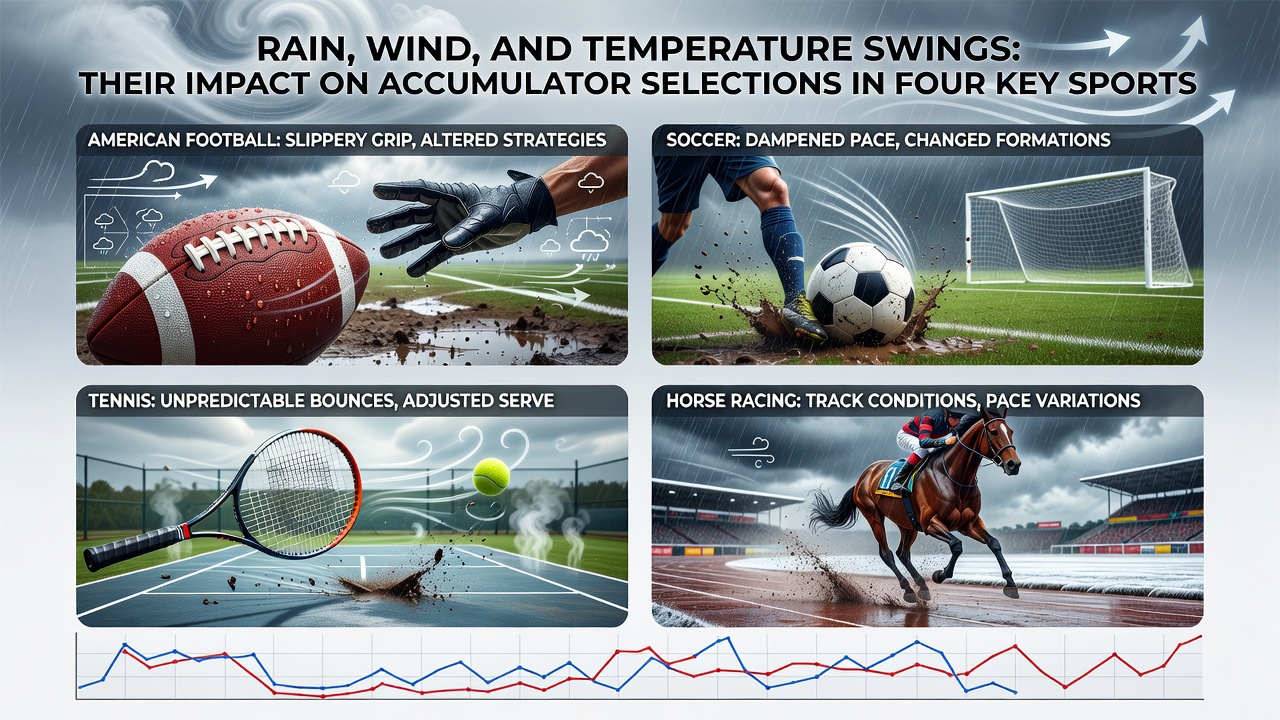
Atmospheric variables such as precipitation, wind velocity, and temperature fluctuations directly alter playing conditions in football, horse racing, tennis, and basketball, which in turn influences statistical outcomes that feed into accumulator selections. Data compiled by meteorological agencies and sports performance analysts shows consistent correlations between these elements and shifts in scoring rates, completion percentages, and race times.
Football matches scheduled during periods of heavy rainfall often see reduced passing accuracy and fewer total goals, according to figures from the European Centre for Medium-Range Weather Forecasts. Accumulators that combine football legs with other sports must account for these changes because clean-sheet probabilities rise while over/under totals drop. Horse racing events on turf tracks experience similar surface softening, leading to slower times and higher draw biases for certain stalls.
Rainfall Effects Across the Four Sports
Persistent rain alters ball behavior and footing in each discipline. In football, waterlogged pitches increase the likelihood of defensive solidity, with historical match data indicating a measurable decline in expected goals when rainfall exceeds 5 millimeters per hour. Tennis courts, particularly clay surfaces, become heavier and slower, extending rally lengths and favoring baseline players over serve-dominant competitors. Basketball games played outdoors or in venues with open designs show reduced shooting percentages from distance, as documented in league tracking systems during wet-weather periods.
Horse racing fields under rain conditions produce different speed ratings, with soft or heavy ground reports from official going descriptions directly impacting trainer and jockey selections within accumulators. Observers note that these adjustments propagate through multi-bet structures because a single altered leg can shift the overall probability distribution of the entire selection.
Wind Velocity and Its Measurable Influence
Strong crosswinds or headwinds affect trajectory sports most noticeably. Football long-range shots and set-piece deliveries deviate from expected paths, while tennis serves and groundstrokes experience altered bounce and flight characteristics on windy days. Basketball perimeter shooting faces comparable disruption when gusts exceed 15 kilometers per hour, according to performance metrics gathered during outdoor or semi-outdoor events.
In horse racing, wind direction relative to the home straight modifies finishing times, particularly in sprints where tailwinds can compress margins between contenders. Accumulator builders who incorporate wind forecasts from regional weather services therefore adjust totals and handicap lines accordingly. Studies from university sports science departments have quantified these effects across multiple seasons, revealing repeatable patterns rather than isolated anomalies.
Temperature Swings and Performance Metrics
Rapid changes in temperature influence muscle function, ball pressure, and surface response. Elevated heat levels in July 2026 tournaments and summer racing festivals have been linked to increased error rates in tennis and higher fatigue markers in basketball, with league data showing drops in field-goal percentages during afternoon sessions exceeding 30 degrees Celsius. Football players exhibit altered work rates in extreme heat, while horses racing in hot conditions display measurable changes in stride efficiency according to veterinary monitoring reports.
Colder swings produce the opposite pattern: stiffer muscles reduce explosiveness in basketball and tennis, and firmer racing surfaces yield faster overall times. Accumulator models that integrate temperature data alongside traditional form indicators therefore achieve tighter probability estimates, as evidenced by research published in applied meteorology journals.
Integrating Weather Data Into Accumulator Construction
Successful multi-sport accumulators require layered inputs that include venue-specific microclimates and short-term forecast revisions. Analysts cross-reference official weather services from agencies such as Australia's Bureau of Meteorology with performance databases to recalibrate individual leg probabilities. This approach proves especially relevant when combining evening tennis matches with daytime horse racing cards, where temperature gradients and wind patterns differ markedly within the same 24-hour window.
Real-time adjustments become necessary when forecasts shift, because even modest changes in precipitation probability can move football goal totals or tennis game counts outside previously modeled ranges. Those constructing accumulators across these four sports routinely monitor such variables to maintain alignment between expected and realized outcomes.
Conclusion
Weather variables exert quantifiable pressure on the statistical foundations of accumulator selections in football, horse racing, tennis, and basketball. Rainfall modifies surface conditions and scoring distributions, wind alters projectile paths and finishing margins, and temperature swings influence physiological outputs and equipment behavior. Data from meteorological organizations and performance tracking systems demonstrates these relationships hold across multiple seasons and geographic regions, allowing structured incorporation of atmospheric forecasts into betting frameworks without reliance on anecdotal adjustments.